
Use case · CONTROL CLOUD

Control distributed assets centrally.
Without infrastructure at every site.

For operators of many sites — water, energy, charging infrastructure, street furniture — where a control system of its own at every site does not pay off.

When conventional infrastructure becomes too expensive, software takes over: connect distributed assets, buildings and infrastructure over radio and open protocols to one central, cloud-native platform — control, visualisation and monitoring included.

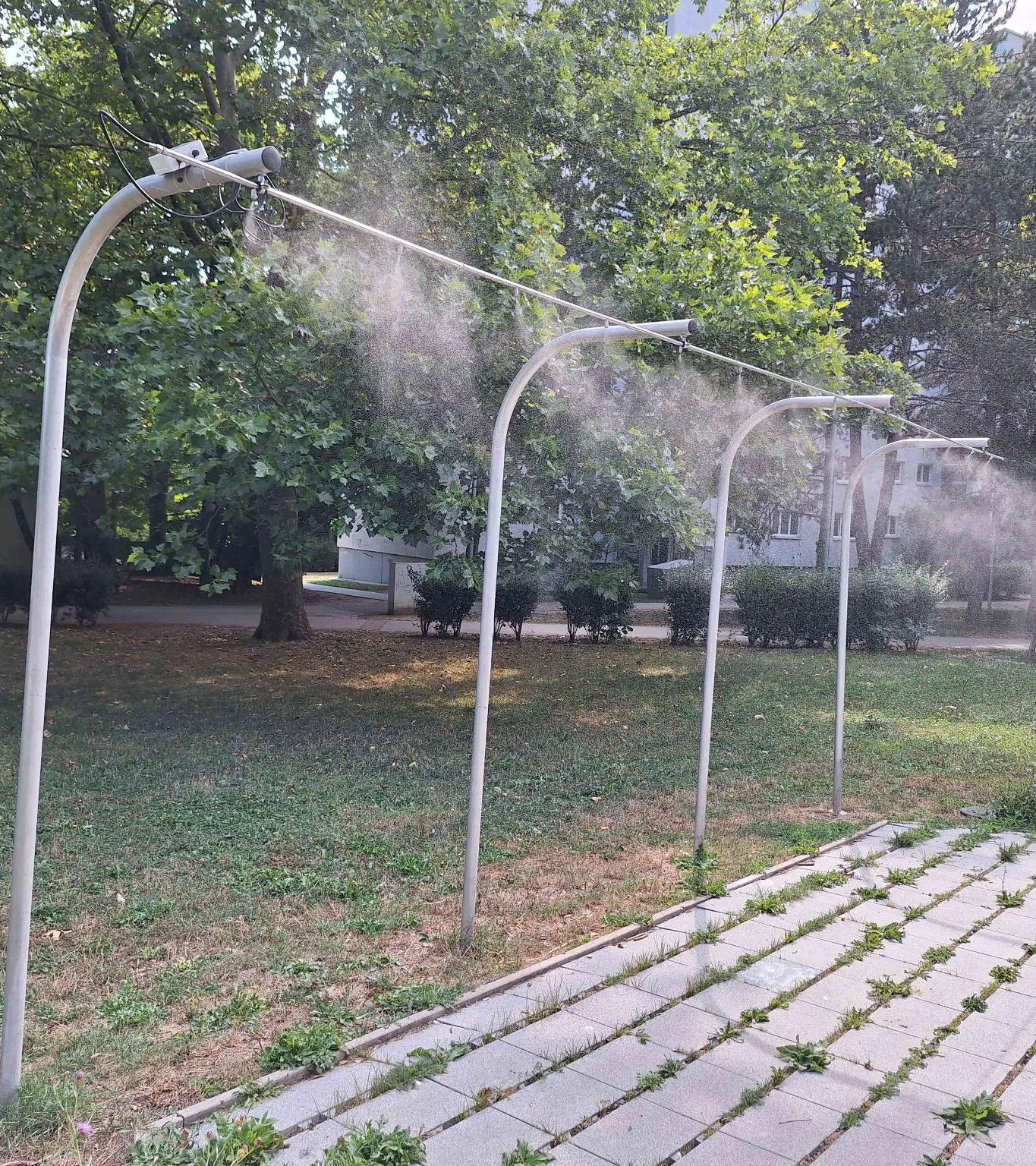
Cool spots in Vienna: battery-powered mist showers by Raintime

Field example · Cool spots Vienna

Software-defined automation — already a reality in Vienna.

60 distributed mist showers. Controlled centrally. Without a fixed power supply.

For Raintime, the control and web operation were built with logiccloud. LoRaWAN and MQTT connect the battery-powered sites to the central control and portal level.

  • 60connected assets
  • 0fixed power connections
  • 1central web portal
  • 24/7status monitoring

From a single cool spot to scalable infrastructure — the same platform.

The principle

One platform connects the distributed world.

Raintime shows the principle: local assets, central intelligence.

  1. 1AssetA battery-powered mist shower — local sensors and actuators.
  2. 2LoRaWANRadio networking without power lines or groundworks, MQTT as the data protocol.
  3. 3CONTROL CLOUDControl, visualisation and central monitoring in the cloud.

The technology stays in the background. The benefit scales.

Customer benefit

The customer benefit becomes visible.

What running CONTROL cloud-native concretely changes for distributed applications.

  • Less infrastructure

    Battery operation and radio networking avoid costly power lines and groundworks.

  • Central control

    All assets in view across sites, through one web portal.

  • Demand-driven operation

    Time-controlled functions act exactly when they are needed.

  • Detect faults earlier

    The status and function of every asset stay continuously visible.

  • Scale easily

    The architecture carries over to further sites and applications.

  • Operate from anywhere

    Web-based access creates transparency regardless of location and device.

The same pattern for buildings and energy.

What works for mist showers works for any distributed equipment: HVAC, lighting, energy and load management or charging infrastructure.

  • Bring trades together

    Manage technical trades on one central platform, independent of manufacturer.

  • Optimise energy

    Analyse consumption, avoid load peaks, optimise self-consumption.

  • Operate GDPR-compliant

    Run it in Europe or on-premises, with role-based access rights.

Frequently asked questions about distributed assets

How are the sites connected?

In the Raintime project, LoRaWAN connects the battery-powered sites and MQTT carries the data. CONTROL also speaks OPC UA, Modbus TCP/RTU and HTTP/REST — the full list is on the connectors page.

Do I need a controller at every site?

Not necessarily. With CONTROL Cloud the virtual PLC runs centrally; the sites deliver sensor data and receive switching commands over the network. Where a site has to keep working without a connection, the same app runs on an edge device on site.

What happens if the connection drops?

If the logic runs centrally, a site without a connection cannot be controlled for that time. That is why everything that has to keep running on site belongs on an edge device at the site — we settle that when designing your application.

Who may operate the web portal?

In licensed cloud operation, only users who have been assigned the role “View HMI”.